



Frequently Asked Questions
Ans: Laser ablation is a reliable, efficient and cost effective process of removal of layers from solid metals or industrial compounds using laser beams for high precision to expose the covered layer. Common coating removals include perylene, poly-amides, silver chloride and gold, but many others are possible. The amount of layers that is removed depends on the intensity, pulse length, and wavelength of the laser, and the material itself.
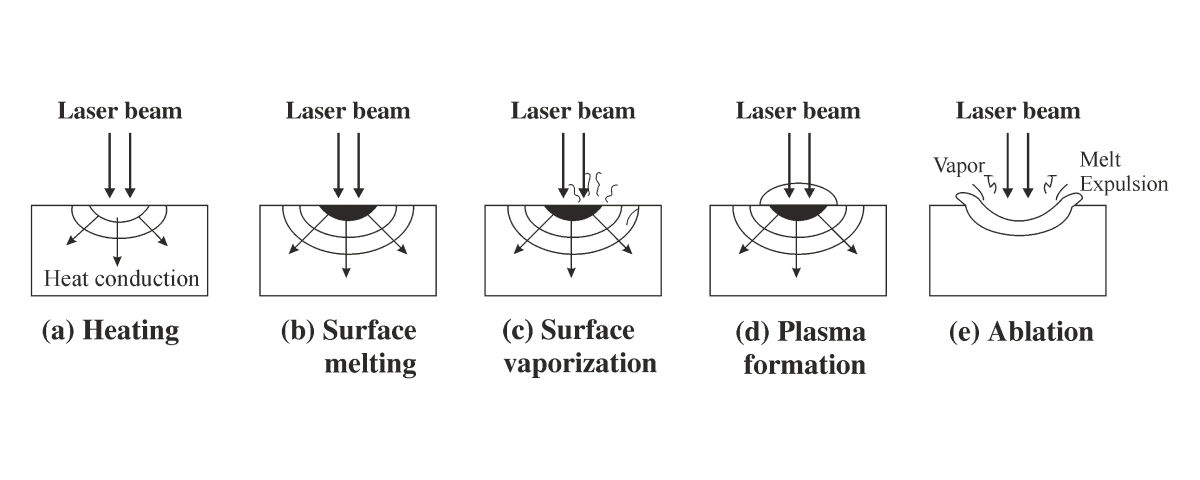
Ans: A short laser pulse is absorbed in a thin surface layer faster than heat can spread into the part. The layer passes its ablation threshold and leaves the surface as vapour, plasma or fine particles. Pulse energy, pulse length, wavelength, scan speed and the number of passes control how much is removed.
Ans: A laser ablation machine can effectively work on a wide range of materials including metals (steel, aluminum, gold), plastics (like PEEK), ceramics, glass, and even in medical research. For example, it’s used to fabricate solar cells, microelectronic components, nanomaterials, and even automotive knobs. Ablation lasers provide fine control when removing paint, insulation, coatings, or contaminants—especially in industries where substrate protection is essential.
Ans: Some are. Laser engraving, deep engraving and laser texturing are ablation, because they vaporise material. Marking is ablation only when it removes a coating or engraves the surface; annealing, foaming and carbon-migration marks change colour without removing material. Cutting is ablation for films, foils and micro-parts, but most sheet-metal cutting melts the metal instead.
Ans: Laser cleaning is one application of laser ablation. Cleaning removes unwanted layers such as rust, oil or oxide across a surface and stops at the substrate. Laser ablation as a production process removes material to a defined pattern or depth, such as backlit symbols, selective coating removal or thin-film scribing.
Ans: Common layers include paint, lacquer, anodising, PVD and metal films, parylene, polyimide, wire enamel and oxides. Substrates include steel, aluminium, copper, gold, plastics such as ABS, PC and PEEK, glass and ceramics. Results are cleanest when the coating and the substrate absorb the laser very differently.
Ans: Laser Ablation finds many applications beyond Primary cleaning. It is a versatile, non-contact technology crucial for maximizing the performance, enhancing conductivity, safety, and sustainability of EV batteries throughout their entire lifecycle. The primary role of laser ablation in EV battery manufacturing is to ensure ultraclean and smoother surfaces and precision structuring for optimal performance, while also supporting sustainable end-of-life processes. Laser ablation ensures Selective removal of organic and inorganic contaminants (dust, oxides, residue) from busbars, tabs, and bonding areas. Reduces critical defects like short circuits and lithium dendrite formation, boosting bond strength and consistency for battery reliability.
Ans: It depends on the layer. Fiber lasers (1064 nm) suit paint, anodising and coatings on metal. UV lasers (355 nm) suit polymers, thin films and heat-sensitive parts. Green lasers (532 nm) suit reflective metals and thin films. CO₂ lasers suit organic coatings and insulation. Femtosecond lasers ablate with almost no heat effect.
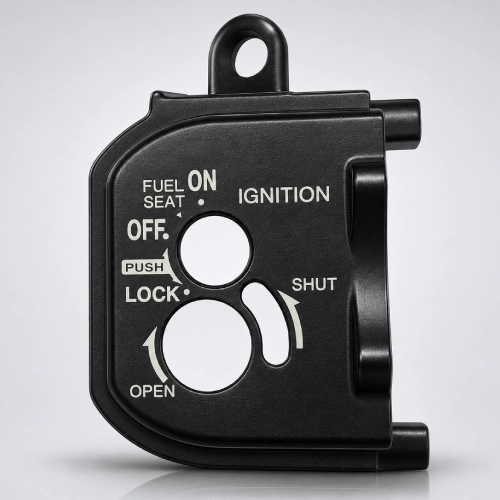
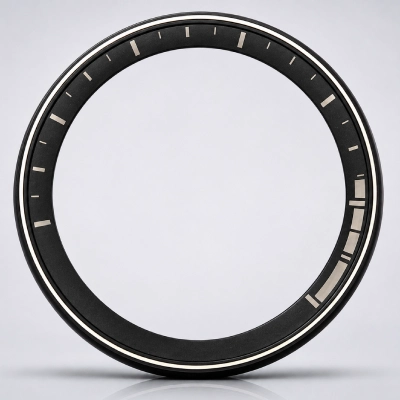
Ans: Day-and-night ablation removes the top paint layer from a translucent plastic part, such as a car switch, knob or appliance panel, in the shape of a symbol. By day the symbol shows in the base colour; at night the backlight shines through it. The paint must be removed completely without burning the plastic.
Ans: Not when the process is set up correctly. Coatings usually ablate at a much lower energy than the material underneath, so the laser is set between the two thresholds and stops at the substrate. Ultrashort pulses reduce heat effects further, which matters for thin, heat-sensitive or medical parts.
Ans: Yes, For precise, selective work. Laser ablation uses no chemicals, abrasives or masks, removes coating only where programmed, and gives the same result on every part. Chemical and mechanical methods can be cheaper for large areas where precision does not matter, but they create waste and can damage fine features.
Ans: Yes, with the right enclosure and extraction. Markolaser’s URSA ablation workstation is Class 1 enclosed, so no laser light escapes during processing. Ablation produces fumes and fine particles, so the system needs fume extraction and filtration. Open or handheld setups need laser safety goggles for the correct wavelength and a controlled area.
Ans: Most Markolaser laser ablation systems cost between 2 - 4 Million INR , depending on the laser source, power, enclosure, automation and software. A standard enclosed workstation sits at the lower end; automated cells with part handling and vision alignment cost more. Send your part for a test and a configuration-specific quote
Ans: Yes. Send your parts through the Markolaser sampling form and we will test-ablate them, share the results and recommend a laser source and machine. Markolaser designs and builds its systems in Gurugram and supplies and supports them across India, including Delhi NCR, Bengaluru, Chennai, Pune, Mumbai, Gujarat and all other manufacturing hubs in India.
Ans: Yes. Laser ablation removes oil, oxide, release agents and old coatings, then ablates the surface itself in a defined pattern to roughen it. Both steps use the same pulsed laser, so a part can be cleaned and textured in one setup before coating, painting or bonding.
Ans: Laser micro-material removal is laser ablation on a micron scale. Each pulse removes a very small, controlled amount of material, so fine grooves, holes, textures and structures can be made precisely. Pulse energy, pulse length, wavelength and the number of passes set the depth and shape of each feature.
Ans: Almost any solid that can be made into a target can be ablated into nanoparticles. The clearest examples are gold, silver and copper (metals), titanium dioxide (an oxide) and silicon (a semiconductor). The laser ablates the solid target in water or a solvent, and the ejected material cools into nanoparticles.